
What is cleanroom validation
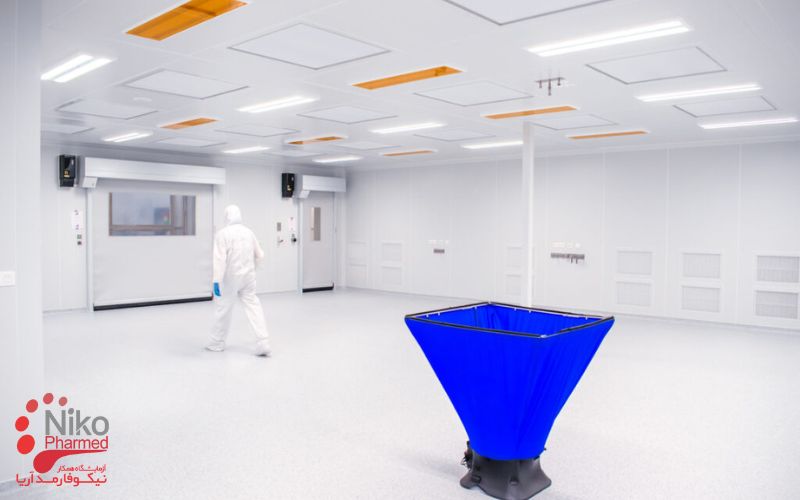
Cleanroom validation is the process of verifying that a cleanroom operates according to its designed specifications and within the required standards for cleanliness, environmental control, and contamination prevention. This is an important procedure in such industries as pharmaceuticals, biotechnology, medical devices, electronics, and any other industry that requires very sensitive product quality.
Cleanroom validation serves to confirm that the cleanroom environment, for factors such as airflow, temperature, humidity, pressure, particle counts, microbial levels, and air filtration, is controlled and stable while continuously meeting specific predefined standards, examples being ISO 14644 or Good Manufacturing Practice. Such cleanroom validation encompasses multiple phases, including design qualification, installation qualification, operational qualification, and performance qualification, each of these stressing different aspects of a cleanroom’s performance.
This process confirms that the cleanroom is suitable for its intended purpose and shall maintain product integrity according to regulatory requirements. It reduces the risk of contamination during manufacturing or research processes.
For free consultation and services, Contact Nikopharmed.
Phases of Clean Room Validation
Cleanroom validation is carried out mainly in four phases: Design Qualification (DQ), Installation Qualification (IQ), Operational Qualification (OQ), and Performance Qualification (PQ)”. Each one of these phases is involved in validating and making sure that the clean room is correctly installed and performs accordingly to maintain the appropriate environment in terms of cleanliness and contamination control.
Design Qualification (DQ)
The aim of this stage is to ensure the clean room design has been correctly executed based on the functional needs and standards set. During this stage, clean room specifications and requirements will be defined by product type, production processes, and international standards, such as ISO 14644 and GMP. Design specifications include dimensions, layout, filtration systems, ventilation, temperature, humidity, and pressure. The review of designs and their validation is accomplished in this regard, as required by standards and operational needs.
The output of the Design Qualification phase is a complete and documented design of the clean room which complies with the required standards and is verifiable.
Installation Qualification (IQ)
The aim of this stage is to confirm that installation of all equipment and systems in the clean room is according to design specifications. These include inspections of ventilation systems, air filtration (HEPA/ULPA), temperature and humidity control systems, pressure monitoring systems, installation documentation, correct layout of equipment, and confirmation according to installation standards.
The output of this phase is an IQ report covering all elements of the installation including:
Project changes
IQ tests conducted
Calibration
Supplier-provided documentation
Equipment certificates
Installation deviations
Site Acceptance Tests (SAT)
Consumable list
Spare parts list
Environmental review report
Operational and instructional document lists
Operational Qualification (OQ)
This phase involves evaluating the performance of the clean room, making sure that equipment and systems work efficiently in conformance with performance standards. Testing would include airflow analysis, measurement of airflow speed and pattern, particulate count, pressure monitoring, and control of temperature and humidity. These tests are generally conducted under static conditions-without people or products-to ensure the systems can meet required standards independently.
The result of this stage is an OQ report showing that systems are working as expected within controlled conditions.
Performance Qualification (PQ)
The objective of this phase is to ensure that the clean room can maintain cleanliness and contamination control standards in real operational conditions, with personnel and equipment present. Full testing, including airborne particle count and microbial levels, along with environmental parameters of temperature, humidity, and pressure, is conducted under normal operational conditions. The clean room’s ability to maintain product quality and contamination control in a real-world setting is confirmed.
The PQ phase gives the clean room a final performance report, which shows that the required environment can be maintained during realistic working conditions and that all requirements can be met.
Cleanroom Validation Steps
Airborne Particulate Validation
The goal is to measure and control the amount of airborne particles to assure that it meets the standards for the clean room classification. Particle counters are used to measure the number and size of airborne particles. Depending on the class of the clean room (e.g., ISO Class 5 or Class 7), validation is done at different intervals according to ISO 14644 or GMP.
Microbial Contamination Validation
Accordingly, the aim is to detect and control microorganisms in the air and on surfaces, including bacteria and fungi, with a view to preventing microbial contamination of products. Air samplers and contact plates/swabs are used to collect samples for microbiological testing.
Environmental Condition Validation (Temperature, Humidity, and Pressure)
The purpose is to maintain, within predetermined limits, environmental variables such as temperature, humidity, and pressure to prevent microbial growth and to guarantee the appropriate operation of the clean room.
Surface Validation
Surface cleaning is of paramount importance to avoid product or equipment contamination. For sampling the surface, contact plates and swabs are used, and the samples collected are subjected to microbial testing.
Personnel and Protective Equipment Validation
Validation ensures that personnel, along with all their protective equipment, are utilized correctly to avoid contamination in the clean room. This covers proper usage of masks, gloves, and other protective gear.
Air Filtration System Validation
This phase makes sure that air filtration systems (like HEPA/ULPA filters) are working properly and maintaining airborne contaminants within acceptable levels.
Entry and Exit Controls and Employee Behaviour
The goal is to minimize contamination through doors, equipment, and personnel. Airlocks and gowning rooms are controlled in order to avoid contamination entering the clean room or leaving it.
Cleanliness and Disinfection Practices
Daily and weekly cleaning programs are in place to maintain surface and air cleanliness within the clean room. Regular cleaning and disinfection minimize the accumulation of particles and microorganisms.
Validation of Materials and Equipment Entering the Clean Room
This includes regulating the access of materials and equipment into the clean room via pass-through chambers to ensure they are clean and sterile.
Importance of Routine Monitoring in Cleanroom Validation
Maintaining Environmental and Product Quality
Environmental monitoring of clean room conditions is important because pharmaceutical products and medical devices are extremely sensitive to airborne particles and microbial contamination. This is done through environmental tests, counting of air particles, microbial surface and personnel analysis, verification of differential pressures between different zones.
Early Detection of Deviations
It allows early detection of any deviation from the established parameters through routine monitoring. For instance, decreased air pressure or airflow speed due to filter failure can be detected in periodic tests with subsequent corrective action taken to guard against any adverse effect on product quality.
Regulatory Compliance
Regulatory bodies and international authorities, such as the FDA and EMA, notably stress the importance of regular and documented monitoring. Breach of these will lead to legal risks, stops in production, and even recalls of the product.
Principles of Performing OQ/PQ Routine Monitoring
1. Defining the Monitoring Program
For instance, a written program according to the ISO 14644-2 standards shall be developed for periodic evaluation on key factors such as pressure, airborne particles, temperature, and humidity. This program shall include test intervals, sample locations, measurement methods, etc.
2. Validation of Measurement Equipment
Measurement devices and sensors shall be calibrated and validated to ensure the results’ accuracy. The frequency of calibration shall be aligned with international guidelines and internal procedures of the organization.
3. Compliance with Clean Room Classes
According to ISO 14644-1, clean rooms can be classified as different classes: Class 5, Class 6, Class 7, and Class 8. Each class has given certain criteria for maximum allowable particle counts per volume of air. During OQ/PQ testing, compliance with these class-specific limits has to be checked and documented.
4. Documentation and Reporting
The results of the monitoring activities should be systematically collated into specific reports. The reports are to include the date, equipment tested, parameters measured, results obtained, and analysis of any deviations along with corrective actions.
5. Risk Management and Corrective Actions
Points of risk may be identified in the clean room monitoring process, along with the determination of key control points, by using tools such as FMEA-Hazard Analysis and Critical Control Points.
Based on standard requirements and process conditions, alarm and action thresholds are set. When any monitored parameter exceeds the alarm threshold, fast root cause analysis is conducted. If it crosses the action limit, the production process may be stopped until the fault is resolved.
One of the major provisions in the GMP standards is that there is periodic review of the effectiveness of the control system and also of the process monitoring. This leads to updating the operational procedures and methods.
Steps for Requesting Cleanroom Validation from Nikopharmed
1. Fill out the Service Acceptance Form
To begin, the customer fills out the acceptance form with details such as company information, type of service required, and the present status of the clean room.
2. Send the Clean Room Layout
Along with the acceptance form, a detailed clean room layout (preferably in PDF format) should be prepared and submitted, including the location of equipment, entry and exit points, and sampling positions.
3. Send documents to Nikopharmed’s Email
The completed acceptance form should be sent, together with the clean room layout, to the email address of Nikopharmed.
4. Invoice Issuance and Payment
The monitoring services will be invoiced upon review of the submitted documents and be sent to the applicant. Payment shall be effected as per the invoice provided for.
5. Coordination by the Validation Unit
After confirmation of the payment, a validation team from Nikopharmed will get in touch with the requesting company for the scheduling of on-site monitoring. The acceptance form and the clean room layout must be provided before the invoice is issued.