
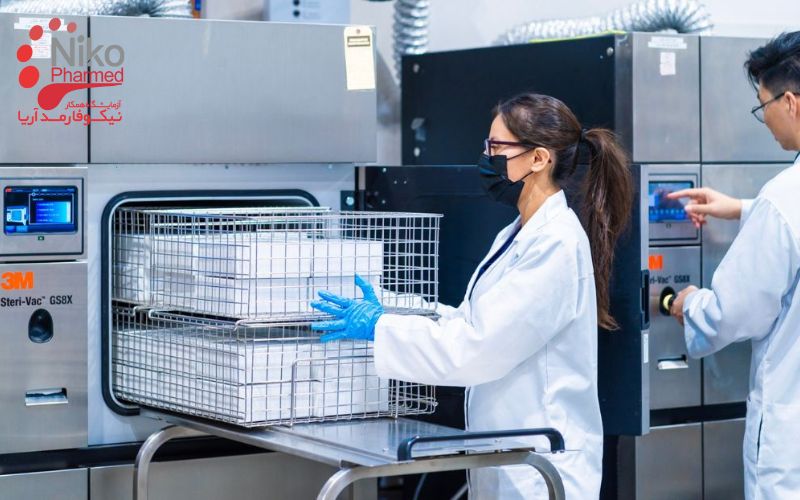
Ethylene Oxide Chamber monitoring means constant surveillance and correct documentation of significant parameters in an Ethylene Oxide (EtO) sterilization chamber to guarantee that the process of sterilization follows standards such as ISO 11135. These parameters include chamber temperature, relative humidity, pressure, EtO concentration, and exposure time, all factors playing a decisive role in the effectiveness of the gas’s microbiocidal action.
For Ethylene Oxide Chamber monitoring or validation, various highly accurate sensors and data logging systems, sometimes supplemented by gas analyzers, are used. Proper validation of the Ethylene Oxide Chamber not only ensures that the sterilization cycle is valid and safe but also provides the capability for traceability, deviation analysis, and accountability during quality audits and regulatory inspections.
Contact Nikopharmed for free consultation about Ethylene Oxide Chamber testing
Steps Involved in Ethylene Oxide Chamber Monitoring
The process of monitoring in the Ethylene Oxide Chamber follows strict guidelines, mainly based on the international standard known as ISO 11135 The specific steps are:
1. Equipment and Installation Qualification (IQ)
Ensuring that the chamber, vacuum systems, temperature and humidity sensors, pressure sensors, and control software are installed according to the manufacturer’s technical specifications.
2. Operational Qualification (OQ)
Performing tests to demonstrate the equipment operates within predefined parameters for temperature, relative humidity, pressure, and EtO concentration.
3. Performance Qualification (PQ)
Physical Tests: Repeating several cycles with master loads to guarantee the repeatability of results.
Microbiological Tests: Using Biological Indicators (BI) and chemical indicators inside products or Process Challenge Devices (PCDs) to test for the most challenging gas penetration conditions.
4. EtO Gas Monitoring
Installing Continuous Emissions Monitoring Systems (CEMS) to measure EtO concentration at the chamber’s output, aeration process, room air, and surrounding operational space.
Setting Alarms based on OSHA limits: PEL = 1 ppm (8-hour TWA) and EL = 5 ppm (15-minute exposure limit) for EtO.
5. Cycle Documentation and Final Reporting
Record each cycle accurately by stating the cycle ID, chamber number, load specifications, exposure time, temperature, humidity, BI and CI results, and aeration time and temperature. Final reports evaluate data and confirm acceptance criteria with comments regarding risks and critical conditions.
6. Software Validation
Ensuring that the software controlling the chamber meets design specifications, since the high risks associated with EtO make operational errors in this area potentially catastrophic.
7. Revalidation
Annual review of historical validation results to verify no changes have been made to process or equipment. If packaging, product, or equipment changes are made, PQ needs to be re-executed.
Contact Nikopharmed for free consultation about Ethylene Oxide Chamber testing
Key Factors in Ethylene Oxide Chamber Validation
Ethylene Oxide Chamber monitoring is an elaborate and crucial process that ensures proper operation and safety throughout the procedure. Essential points to be borne in mind regarding the process of validation include:
Temperature: The temperature inside the chamber should be uniformly distributed for maintaining standard sterilization conditions.
Pressure: The pressure of the chamber should be carefully regulated to uniformly distribute the EtO gas inside.
EtO Gas Concentration: EtO concentration shall be sufficiently high to ensure that bioburden on the equipment is eliminated.
Humidity: The appropriate relative humidity increases the effectiveness of EtO gas during sterilization.
Time: Sterilization cycle time should be long enough to allow complete penetration of the gas in all areas of the product.
What Certification is Required for Ethylene Oxide Chamber?
Installation Qualification (IQ): Ensures proper installation of chamber and systems.
Operational Qualification (OQ): Ensures equipment performance under normal conditions.
Performance Qualification (PQ): Ensures that the chamber is able to sterilize products efficiently and consistently.
Ethylene Oxide Residue Evaluation
Residues of EtO and its derivatives, including ethylene chlorohydrin and ethylene glycol, shall be minimized on medical products following the sterilization process according to ISO 10993-7.
Documentation and Audits
All the details of processes, cycle parameters, equipment history, and testing have to be documented. Specialized teams make audits regarding compliance to ISO standards.
Product Quality Control
Products are sampled before and after sterilization and tested for microbiological and chemical purity to assure effective sterilization.
Contact Nikopharmed for free consultation about Ethylene Oxide Chamber testing
Why Ethylene Oxide Chamber Monitoring is Essential
-
Patient and User Safety
Residual EtO or its derivatives (e.g., ethylene chlorohydrin and ethylene glycol) on medical products can pose serious health risks to patients and equipment users. Monitoring helps minimize EtO residues to ensure safety, as per ISO 10993-7. -
Ensuring Sterilization Process Effectiveness
Accurate Ethylene Oxide Chamber monitoring allows real-time tracking of critical parameters like temperature, pressure, humidity, gas concentration, and exposure time. These parameters are essential in eliminating the bioburden on medical equipment. Any deficiencies can result in incomplete sterilization, posing significant risks to patient health. -
Compliance with International Standards
ISO 11135 and ISO 10993-7 set strict requirements for Ethylene Oxide Chamber sterilization processes. Regular monitoring ensures compliance with these standards, guaranteeing product quality while preventing legal issues or failed audits. -
Risk Management and Error Prevention
Consistent monitoring helps identify potential issues before they occur, reducing the risk of system failures that could impact sterilization. Monitoring the Ethylene Oxide Chamber reduces the likelihood of errors, saving costs and improving operational efficiency. -
Maintaining Product Quality
Sterilized medical equipment must retain its functional properties and be free of microorganisms. Ethylene Oxide Chamber monitoring ensures that the sterilization process does not damage the product, maintaining both sterility and performance. -
Documentation and Audit Readiness
Thorough documentation of every step of the Ethylene Oxide Chamber monitoring process ensures transparency and readiness for audits. Proper record-keeping helps in demonstrating compliance during internal and external inspections.
Conclusion
Ethylene Oxide Chamber monitoring is not only a regulatory and standard requirement but also a critical process to ensure the safety, quality, and effectiveness of medical equipment sterilization. This process aids in continuous improvement, risk management, and patient safety while ensuring compliance with international standards. As a cornerstone of sterilization in the medical industry, it is essential that medical equipment experts carefully plan and execute Ethylene Oxide Chamber monitoring to enhance healthcare quality and safety.